

Hello, everyone!
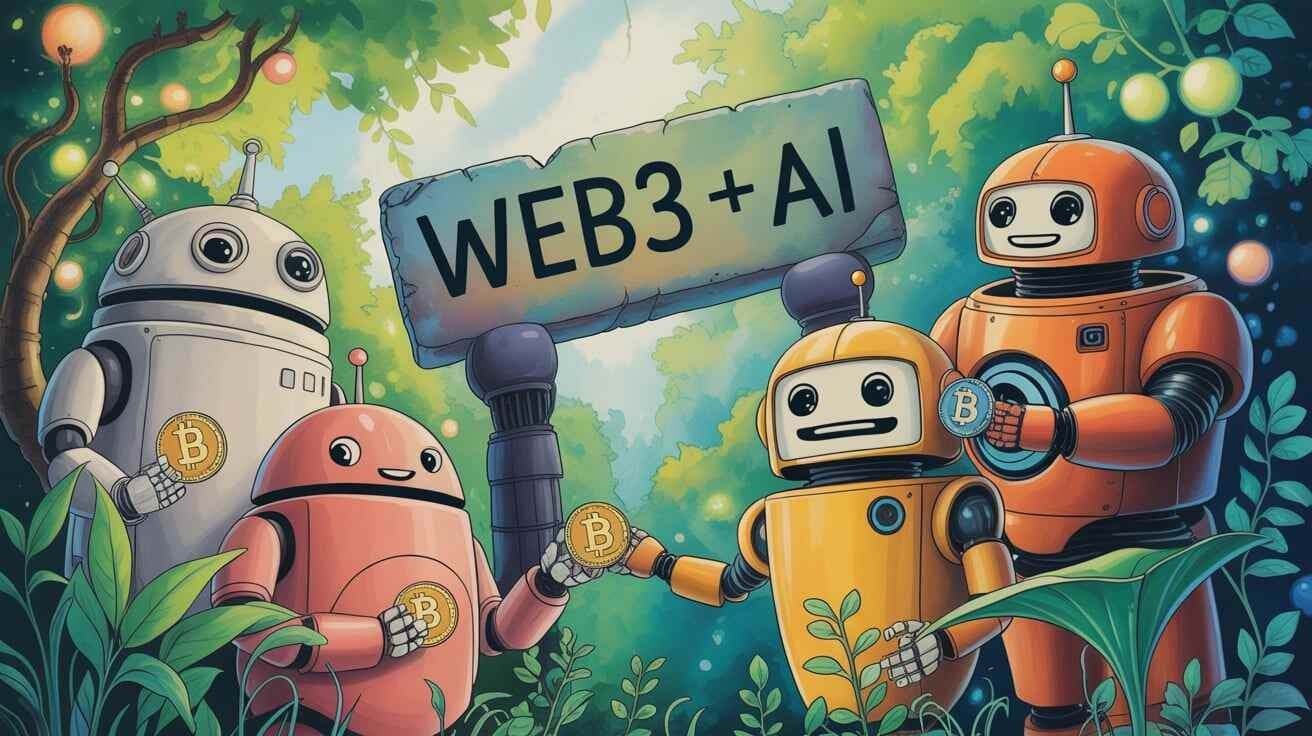
The Web3 + AI Newsletter, your guide to the burgeoning intersection of blockchain and artificial intelligence, is back! After taking a long pause from writing due to work and various side gigs, I’m happy to reassess my favourite topic. What’s more, it seems like speaking up in favour of Decentralized AI is gradually becoming a matter of paramount importance.
Thank you for (re-)joining me on this journey!
Decentralized AI (DeAI) is More Needed Than Ever
If this is your first time here, you’re probably wondering what Decentralized AI (or DeAI) is and why on earth we need it. And you’d be right to wonder: DeAI is not a household term or a widespread topic of discussion. But my goal here is to show you why it matters and why you should pay attention to it.
In short, DeAI is an emerging field focused on redistributing the core components of artificial intelligence, like data, compute, and control, away from centralized institutions and into the hands of more people. By making AI systems community-driven, DeAI delivers enhanced transparency, fairness, and security, and offers a viable and safer alternative to the centralized and closed-sourced models. It might be one of the most important shifts in technology.
Let me paint a picture to better explain the world we currently live in.
In April, the UN Trade and Development (UNCTAD) conference issued a stark warning about the growing inequality in the AI landscape. It reported that the AI market, projected to reach $4.8 trillion by 2033, roughly equivalent to the size of Germany’s economy, is dominated by a mere 100 companies, most of which based in the US and China.
It’s becoming increasingly clear that artificial intelligence is the 21st century’s equivalent of nuclear weapons - a transformative force capable of redefining global power dynamics. AI is not just another technological leap; it is one of the most powerful tools humanity has ever created. Its impact will separate global leaders from laggards.
That’s why it’s no surprise that nation-states, rather than corporations alone, are emerging as the primary players in the AI race. Given AI’s resource-intensive nature, demanding vast compute power, data, and capital, governments are stepping in to secure strategic advantage.
Yet perhaps the most alarming aspect isn’t the geopolitical competition itself, but the fact that AI’s future is being shaped in closed rooms by a handful of power players. As my friend Alina Latinina noted, the future of AI is currently being decided by “bullish CEOs swap[ping] trade secrets with state leaders who wear optimism the way magpies wear other people’s jewelry, and princes who measure personal growth in cruise missiles per annum”.
This concentration of power should concern us all. Without intervention, AI’s benefits may stay locked in the hands of a global elite, worsening the digital divide and amplifying existing inequities. And this isn’t just a hypothetical risk anymore.
Centralized and closed AI models, built by tech behemoths like Microsoft and Google, have already been accused of ethical transgressions, proving once again the dangers of monopolies.
And it’s not just experts or activists raising concerns. Everyday people are worried, too. A recent DCG poll found that most Americans distrust centralized AI and see DeAI as a fairer, more transparent alternative. When regular users start sounding the alarm, you know things are getting serious, right?
I dissected the survey’s results in an article for the Decentralized Cooperation Foundation (DCF) blog - check it out here to learn more.
The dominance of centralized AI comes at a steep cost: compromised privacy, opaque decision-making, and mounting ethical concerns. But here’s the good news: DeAI is finally entering the public conversation. People are beginning to recognize its advantages, like enhanced data ownership, improved security, resistance to single points of failure, and broader access to powerful AI tools through edge computing and decentralization.
The opportunity is there. DeAI has a real shot at reshaping the future of AI, but it must prove it can deliver on its promises, especially around security, reliability, and usability. Because if we want an AI future that serves the people, not just the powerful, decentralization isn’t optional. It’s essential.
Join me in following the advancement of DeAI and the wider Crypto & AI space. Make sure to subscribe and spread the word to your friends!
Thank you for reading! I hope you found this article insightful.
If you’d like to keep up with the latest developments at the burgeoning intersection of blockchain and AI, I invite you to subscribe.
And if you find value in my writing, consider supporting the newsletter. I’d greatly appreciate it.
The Web3 + AI Book Club is live on Fable. Follow the link below and come join our literary community.
I'm looking forward to connecting with fellow Crypto x AI enthusiasts, so don't hesitate to share your thoughts here or reach out on LinkedIn, Instagram, or Firefly.social.
Disclaimer: The content of this newsletter is provided for informational and educational purposes only. Nothing contained herein should be construed as financial advice or as a recommendation to buy, sell, or hold any of the companies or assets mentioned.
Please don’t take my views at face value. Instead, do your own research (DYOR), think critically, and share your perspective so we can challenge ideas, learn from one another, and arrive at better conclusions through thoughtful discussion.